
One of the most frequent questions I hear from Stylists (ala their Clients) is how best to care for custom-made clothing once it arrives at home and before it arrives to the Client. We spend so much time ensuring a suit or shirt is perfectly constructed, with the right fabric, cut, and finish, that it is only natural to want to keep it looking immaculate. Yet the truth is, the tools most often used, steamers and irons, can either preserve that investment or undo it, depending on how they are handled. |
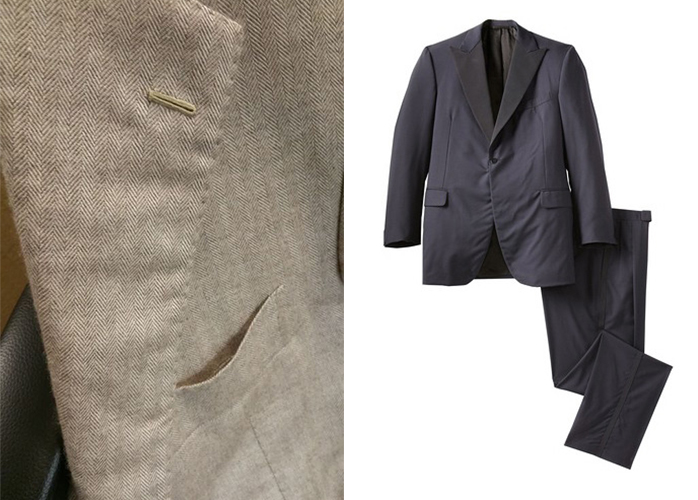 |
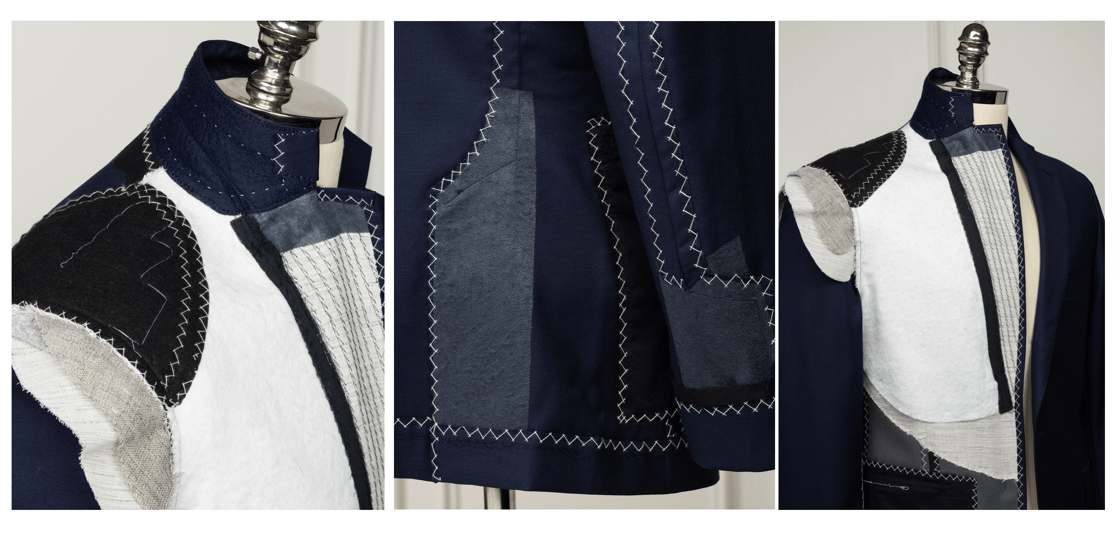
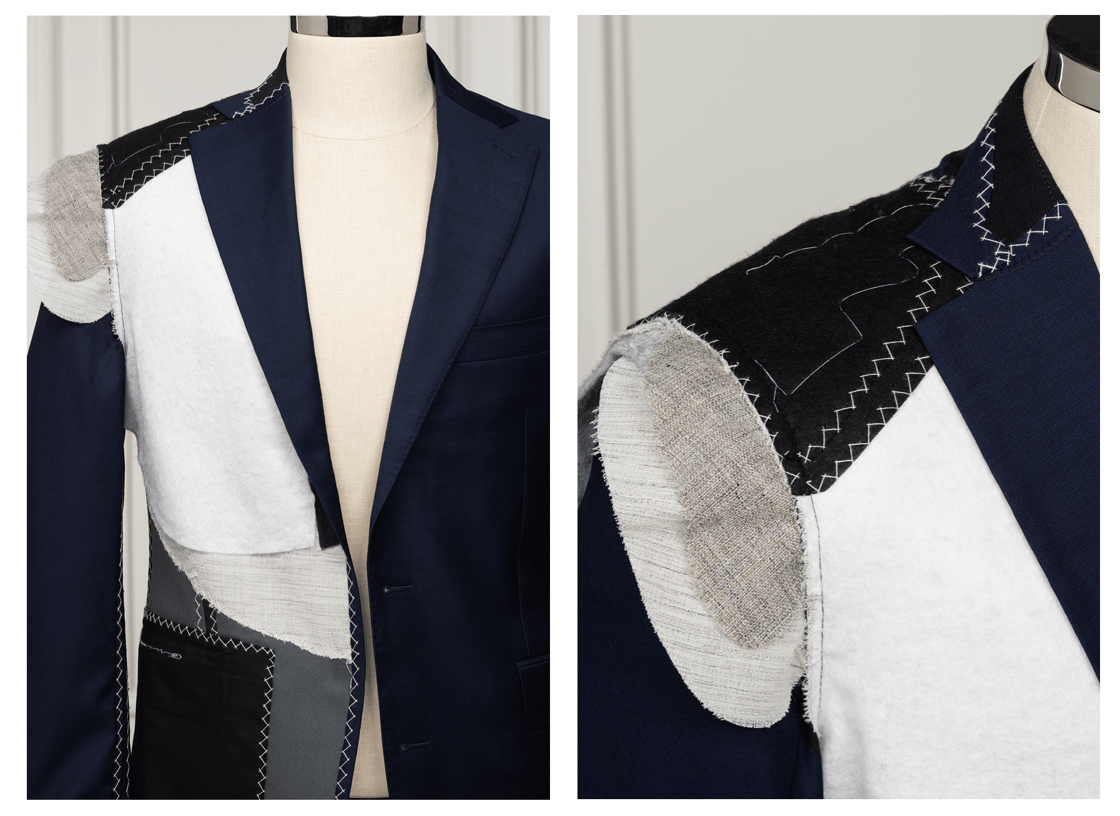
Let me begin with steam. A handheld steamer may seem like the simplest way to smooth out creases, and indeed for knitwear or casual shirting it can be a quick solution. But when used incorrectly on a constructed suiting garment, steam can do more harm than good. Jackets and trousers are built with an interlining and a network of componentry designed to give the cloth its shape and structure. Excess or overly direct steam can penetrate those layers and cause the interlining to bubble or warp, permanently distorting the garment’s silhouette. In suiting, steam should be used with extreme care, and I would advise using it sparingly, at a distance, or not at all. More often than not, a warm iron is a safer choice with a clean, lint-free cloth.
When I steam at home, I rely on two simple tricks that every professional knows. I always pull the fabric taut as I pass the steam across it, then blow gently to cool the fibres in place. This imitates the same effect as a tailor’s vacuum pressing board, heat followed by controlled cooling, so the cloth sets cleanly without distortion.
As a fashion student in London, I soon learned that good pressing can improve the look of any garment and is a vital part of the elaborate construction of tailored garments. Many stages of our production involve opening up of seams, pressing in shape, helping the final appearance of the final tailored piece. I also like to roll up an appropriately sized towel if you have difficulty pressing sleeves |
 |
That said, irons are hardly foolproof. The key variable is always temperature, and here one must understand the nature of the fabric. Natural fibres such as cotton and linen can withstand higher heat and will often press beautifully under it. This is why your cotton shirt will crisp up neatly with a hot iron, or a linen jacket can be refreshed after travel with a firm press. Wool, too, can tolerate a medium heat, though it requires a gentler hand and often benefits from a pressing cloth placed between fabric and iron. |
 |
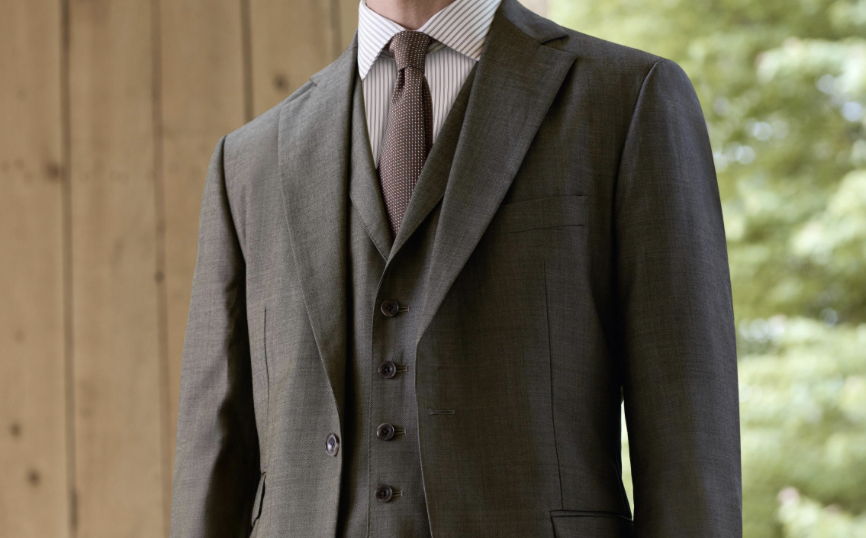
By contrast, man-made fibres require the lightest possible touch. Our Performance quality by Canclini, for example, is engineered for durability and comfort, but if subjected to the high temperatures suitable for cotton or linen, it would scorch or even melt. With synthetics, always begin with the lowest setting and increase only as absolutely necessary, testing first on an inconspicuous area. A moment’s inattention can compromise the very fibres of the fabric. |
 |
There is also the question of technique. Pressing and ironing are not synonymous with dragging the iron back and forth. A good press is often about placing the iron, allowing the heat and weight to do their work, and then lifting cleanly. In this way the fabric retains its integrity without being stretched or distorted. Similarly, when using steam, a light hovering pass is preferable to pressing the nozzle directly into the garment.
My advice, always, is to respect the cloth. Custom garments are not only defined by their fabric but by the craftsmanship within — the canvassing, the interlinings, the finishing. They deserve a careful approach. When in doubt, err on the side of caution: lower heat, lighter steam, and never a rush. A good suit is designed to serve you for years; a few extra moments of care at home will ensure it continues to do so, in perfect form.
Simon Kneen |